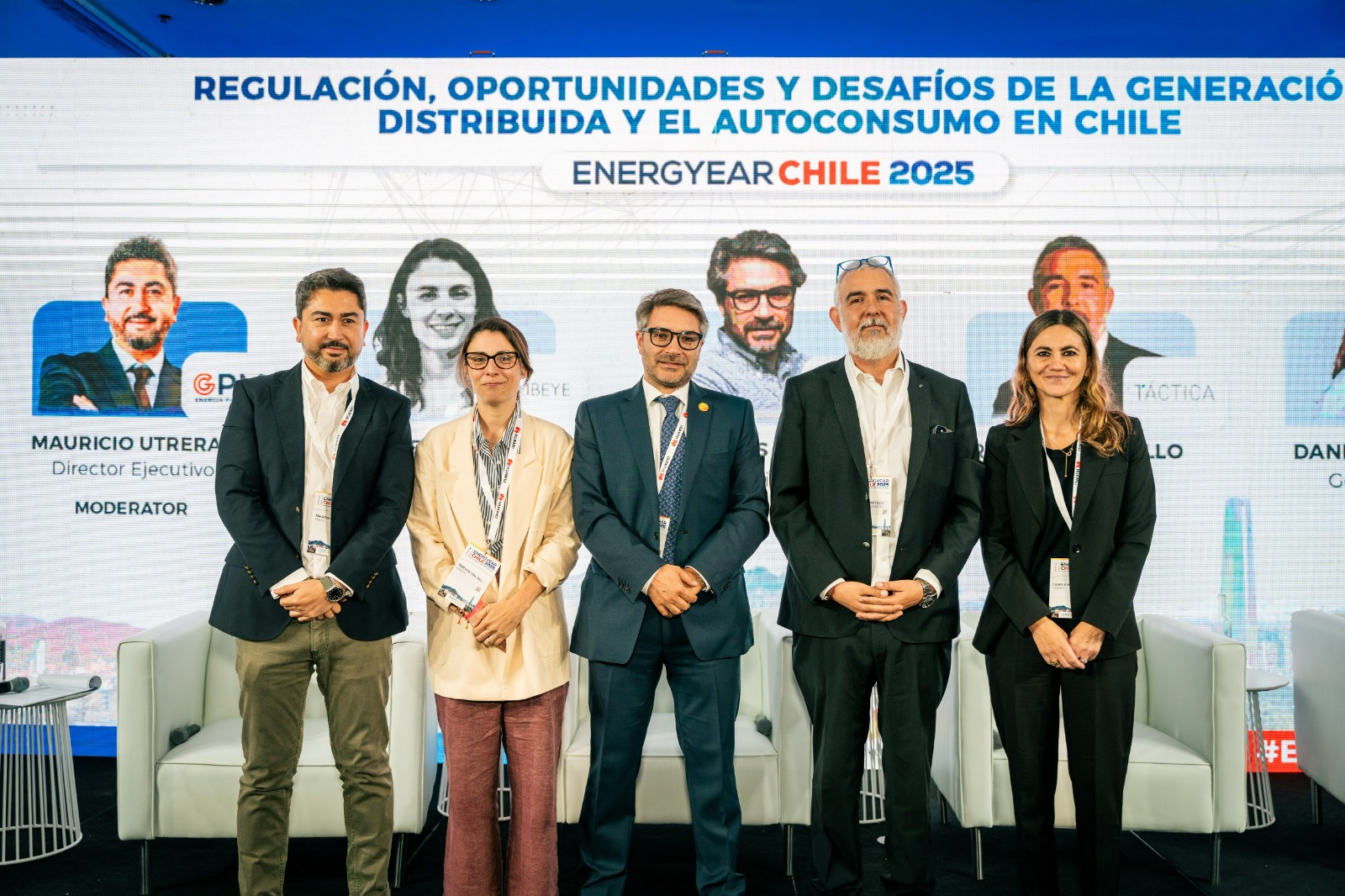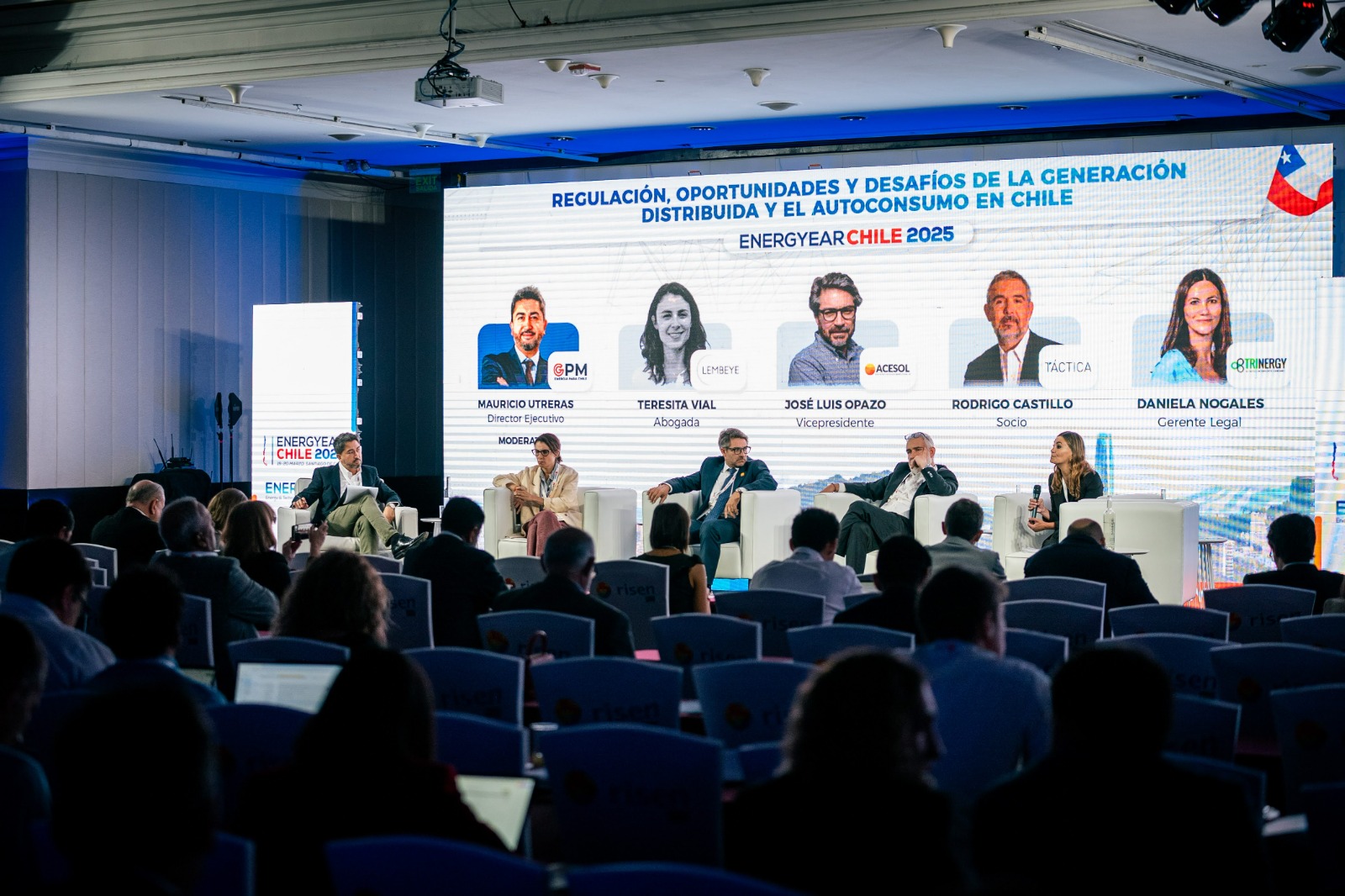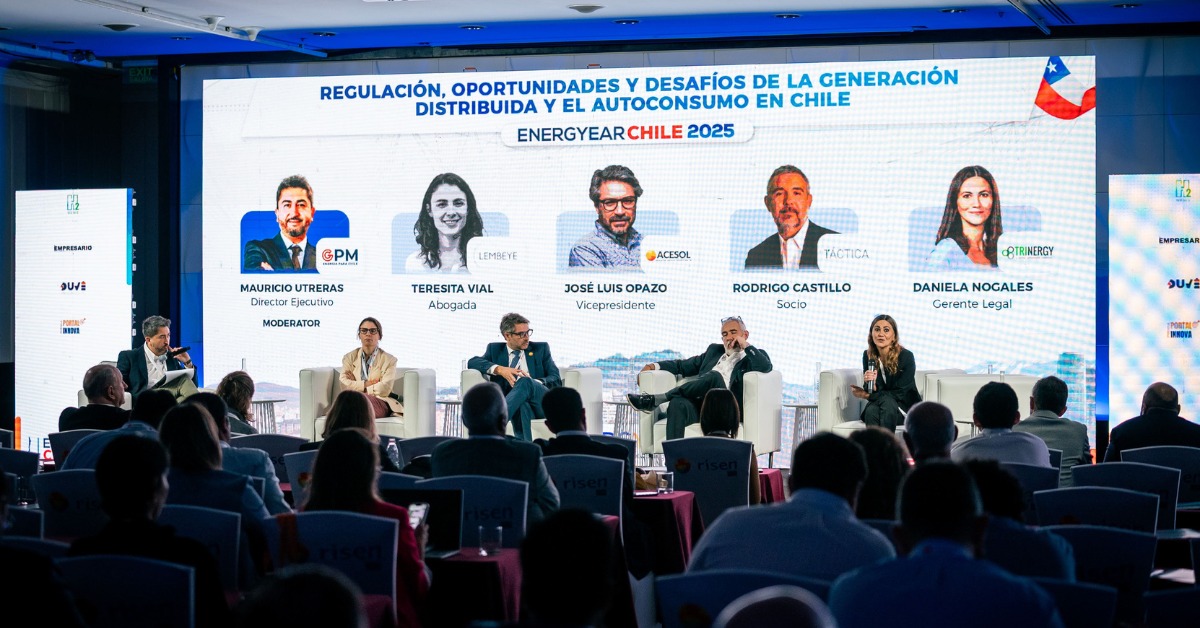
On March 19 and 20, the fifth edition of Energyear Chile took place, bringing together leading figures, companies, institutions, and associations from the energy sector. This year, discussions focused on key issues such as distributed generation, self-consumption, and regulatory challenges.
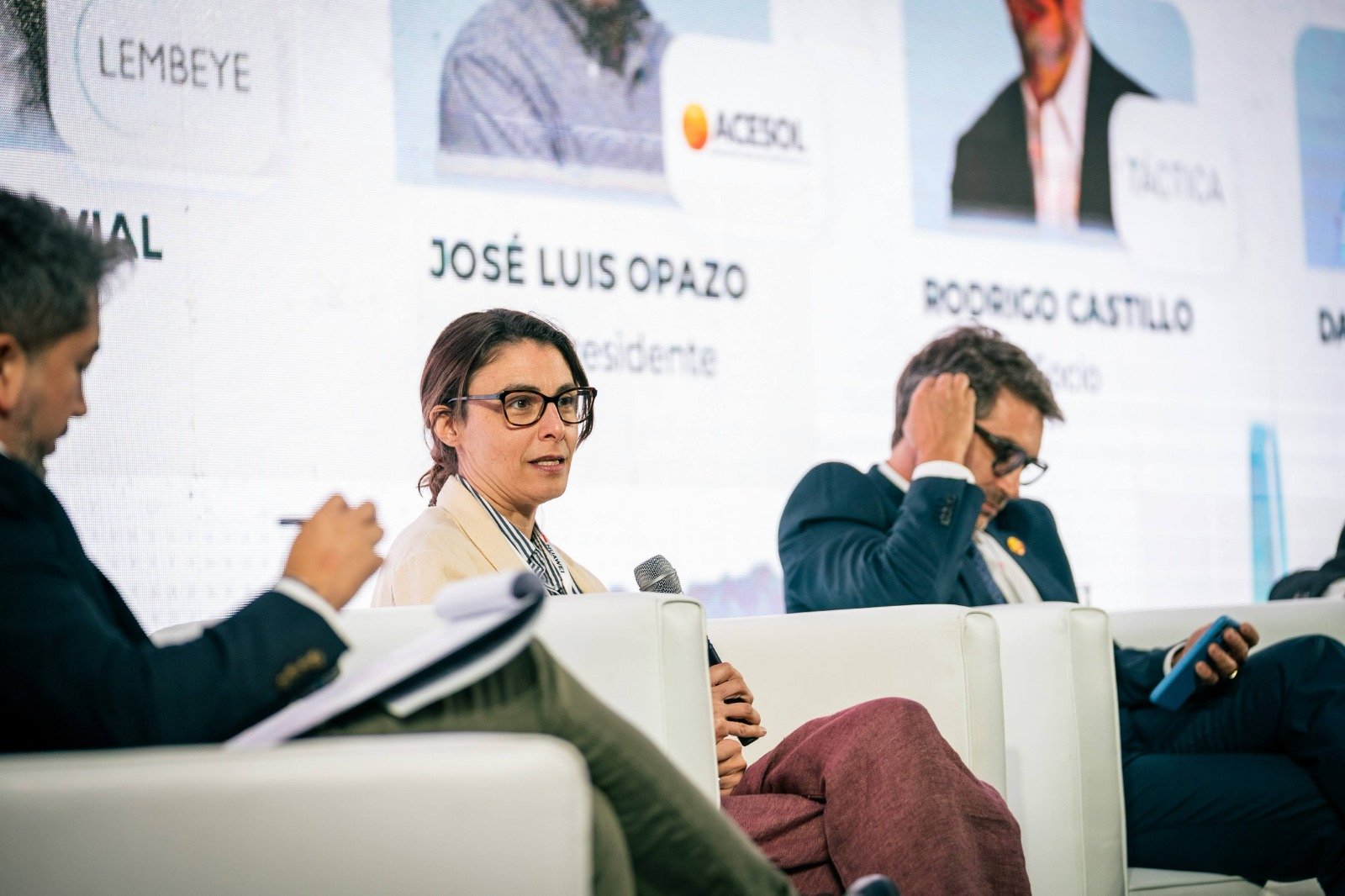
Teresita Vial, Head of Lembeye’s Energy practice, participated as a speaker on the panel “Regulation, Opportunities, and Challenges of Distributed Generation and Self-Consumption in Chile,” moderated by Mauricio Utreras, Executive Director of GPM A.G., and featuring José Luis Opazo, Vice President of ACESOL; Rodrigo Castillo Murillo, Partner at Táctica; and Daniela Nogales Riera, Legal Manager at Trinergy.
Mauricio Utreras opened the panel by highlighting the growth of small- and medium-scale energy companies, which now account for approximately 10% of total generation in Chile’s National Electric System, with 3.2 GW of installed capacity. He also emphasized the expansion of the Net Billing scheme, which has surpassed 300 MW nationwide, with steady growth of 8 MW per month.
Teresita Vial addressed the debate surrounding the stabilized price mechanism for Small Distributed Generation Facilities (PMGD), an issue that has sparked controversy within the industry. She explained that the regulatory framework governing PMGD has been debated since its inception and that, after years of discussion, the stabilized price was revised along with certain connection and operational rules. However, some investors were satisfied with the changes, while others were not. “The question now is whether this mechanism should continue to exist, given that it creates a market distortion,” she stated.
She also discussed the relationship between this issue and the Electric Subsidy Bill, noting that some stakeholders argue that PMGD operators earn excess returns as a result of the stabilized price, a situation that has been described as “unjust enrichment.” However, she stressed that the bill does not address this issue or the distortions it creates.
Vial called for the two discussions to be kept separate: “The electric subsidy bill does not resolve the issue of the stabilized price for PMGD. Capturing PMGD revenues is neither a structural solution to the subsidy issue nor a solution to market distortions.”
Along the same lines, José Luis Opazo highlighted the key role of distributed generation in the energy transition and in reducing costs for consumers. However, he warned that its regulatory framework needs to be improved and its rules clarified. He agreed with Teresita Vial that PMGD regulation should be addressed separately and based on technical criteria, while respecting investors’ acquired rights.
The discussion also highlighted the technical and regulatory challenges facing distributed generation in Chile. Rodrigo Castillo warned that the electricity system is not prepared to accommodate large volumes of distributed generation and called for better coordination with the National Electric Coordinator to prevent risks to system stability.
Meanwhile, Daniela Nogales stressed the urgent need to modernize Chile’s self-consumption regulations. She criticized the Net Billing Law for failing to provide adequate incentives to encourage investment in renewable energy and argued that the 300 kW capacity limit poses a barrier to further development. She also pointed to the lack of transparency surrounding connection costs, which makes widespread adoption of these systems more difficult.
The panel concluded with a consensus among the experts on the need to modernize distributed generation regulations and ensure a stable regulatory framework. As Teresita Vial emphasized: “It is essential that the discussion on PMGD regulation be addressed independently and based on technical criteria.”
Chile’s energy transition continues to advance, but clear regulations aligned with the sector’s needs are essential to ensure its sustainable development.